Fence Screening Plants – Fast-Growing Evergreen Hedges
Chain-link, metal fencing or the neighbour's terrace – the question we hear most often is: what should I plant along the fence that grows fast and screens all year round? Here we compare the four most reliable evergreen hedge plants to make your choice easier.
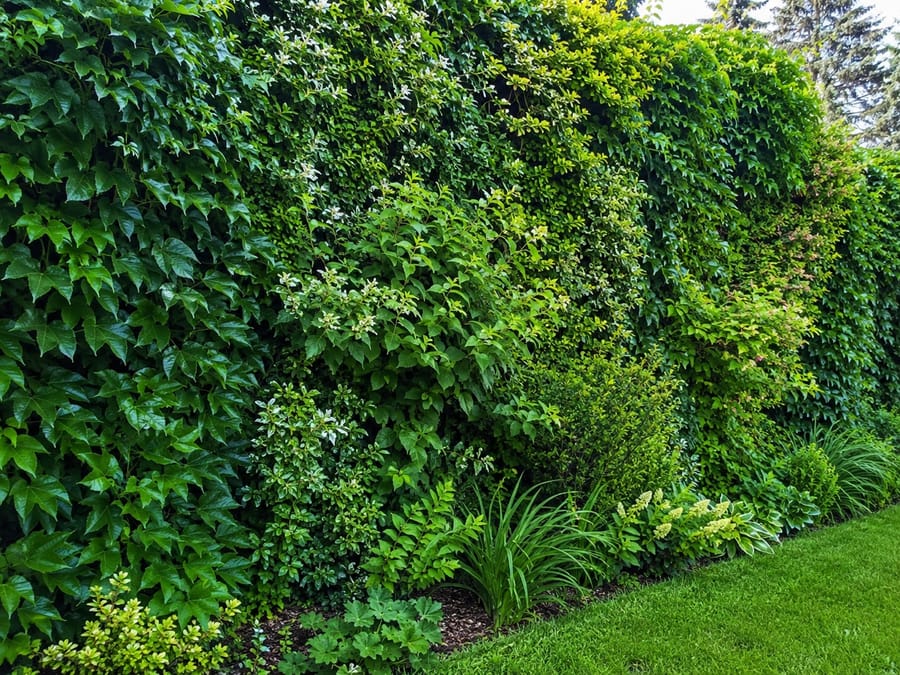
The choice comes down to aspect (sun or shade), the width available, the height you want and how urgently you need screening. Below we sum up how fast each of our proven evergreen hedge plants grows and where it belongs – and at the free on-site survey we talk all this through and give you an honest recommendation.
Which is the fastest-growing evergreen hedge?
Ranked by annual growth, our four best-proven hedge plants are:
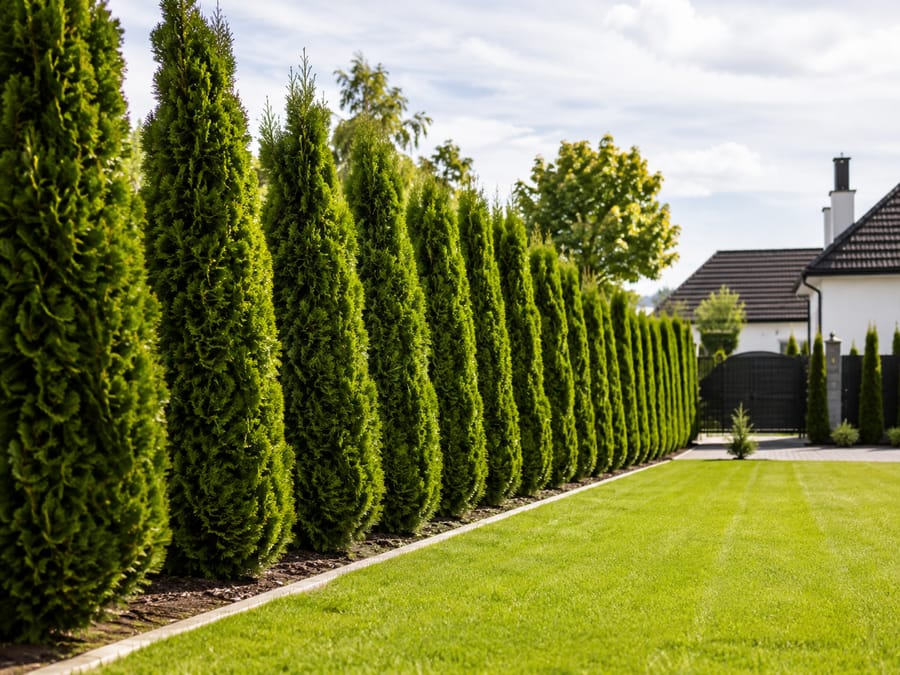
- Leyland cypress: 80–100 cm a year – the fastest tall screening.
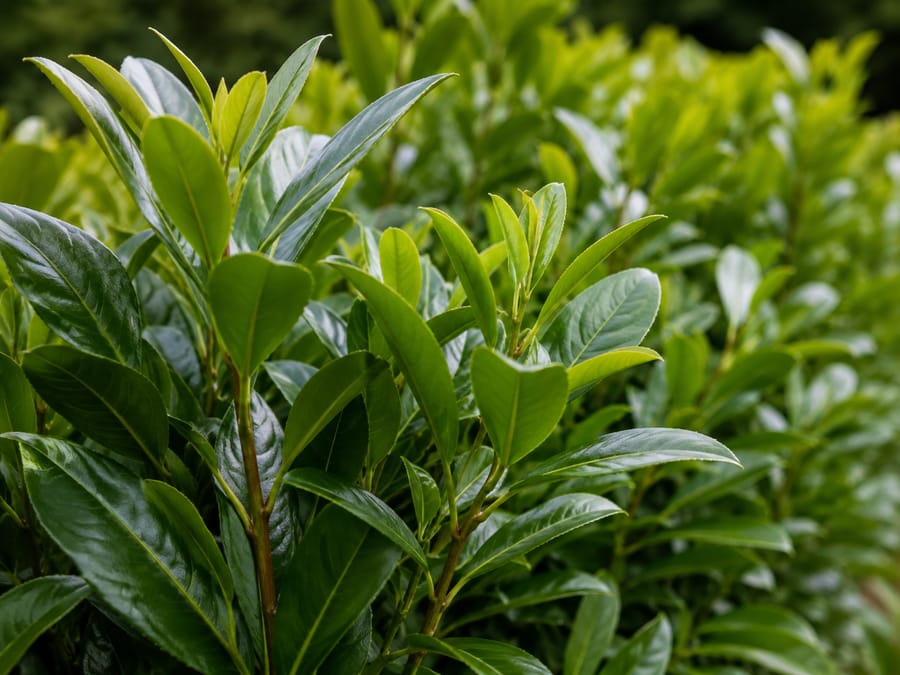
- Cherry laurel: 40–60 cm a year – fast, dense and versatile.
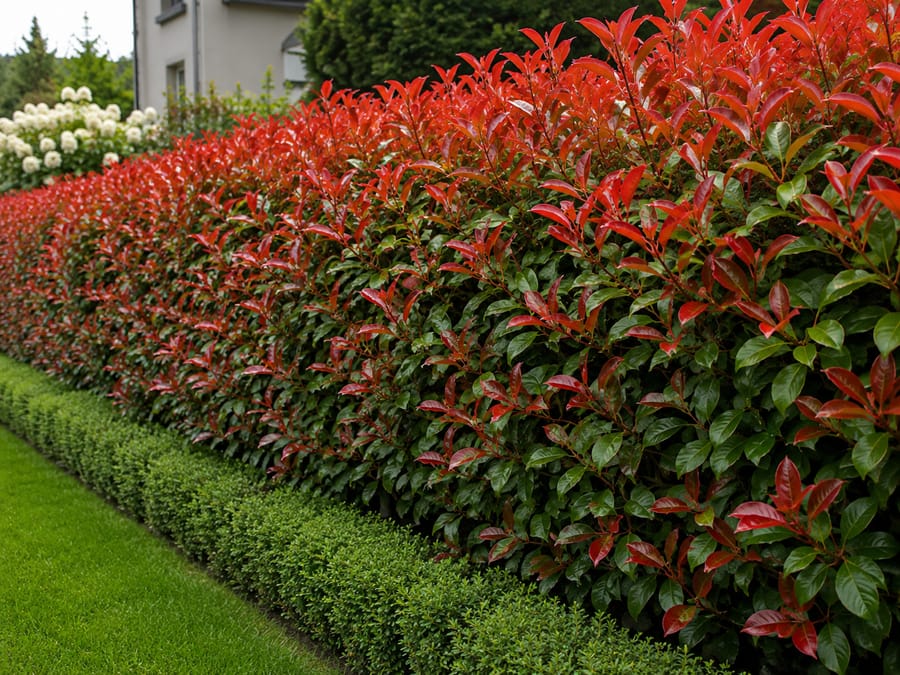
- Photinia: 30–50 cm a year – the most striking, with its red shoots.
- Columnar yew: 20–30 cm a year – slow, but the most enduring.
Evergreen hedge along a fence: what should you consider?
Besides speed, these are the factors that decide which plant suits your fence:
- Aspect: Leyland, cherry laurel and photinia for sunny spots, cherry laurel for partial shade, and columnar yew for a shady strip.
- Space: in a narrow strip, such as between a fence and a footpath, columnar yew fits best.
- Height: cherry laurel or photinia for a 2–3 metre wall, Leyland cypress for 3–5 metre screening.
- Soil: cherry laurel tolerates almost any soil, while photinia and yew prefer free-draining soil.
- Care: Leyland needs 1–2 trims a year, while yew needs the least trimming. Yew is poisonous, so for families with small children we suggest something else.
Not sure which one suits your fence?
We look at the site, recommend a plant and give you an itemised price for the planting.
Privacy screening, even straight away
If you don't want to wait for years, choose larger plants: with 150–200 cm container-grown cherry laurel or Leyland, the screening is impressive in the very first year, while with smaller, 60–100 cm plants the hedge closes up in 2–3 years. A drip line laid along the row is the biggest help during the first two years of establishment. If a dried-out thuja row currently stands along your fence, our hedge replacement package covers removing the old row and planting the new one in one go.
Hedge Calculator
Work out how many plants your hedge needs and what your quote will include.
Your quote lists each of these on a separate line:
- Plants: Cherry laurel, 20–30 plants, 100–150 cm
- Soil preparation and planting medium – 10 m
- Planting, watering-in, mulching on request
- Delivery and call-out
Indicative estimate: we determine the exact layout and number of plants at the on-site survey.
What's included
Where do we carry out planting?
We plant fence-screening hedges within roughly 100 km of Keszthely. Our local pages:
Frequently asked questions
Which is the fastest-growing evergreen hedge?
Leyland cypress: it can grow as much as 80–100 cm a year. It is followed by cherry laurel at 40–60 cm a year, then photinia at 30–50 cm and columnar yew at 20–30 cm.
What should I plant along a fence in a shady spot?
For a shady strip, columnar yew is the best choice: it grows well even in shade and fits into narrow spaces. Cherry laurel can also be planted in partial shade. Yew is poisonous, so for families with small children we suggest something else.
How tall can the screening be?
Cherry laurel and photinia can be grown into a 2–3 metre hedge, and Leyland cypress into one as tall as 3–5 metres.
How long does it take for the hedge to provide screening?
Depending on plant size, it closes up in 1–3 years; with 150–200 cm plants the screening is impressive in the very first year.
Not sure which plant to choose?
Request a free survey – on site, we will show you which hedge suits your garden.
Request a quote